


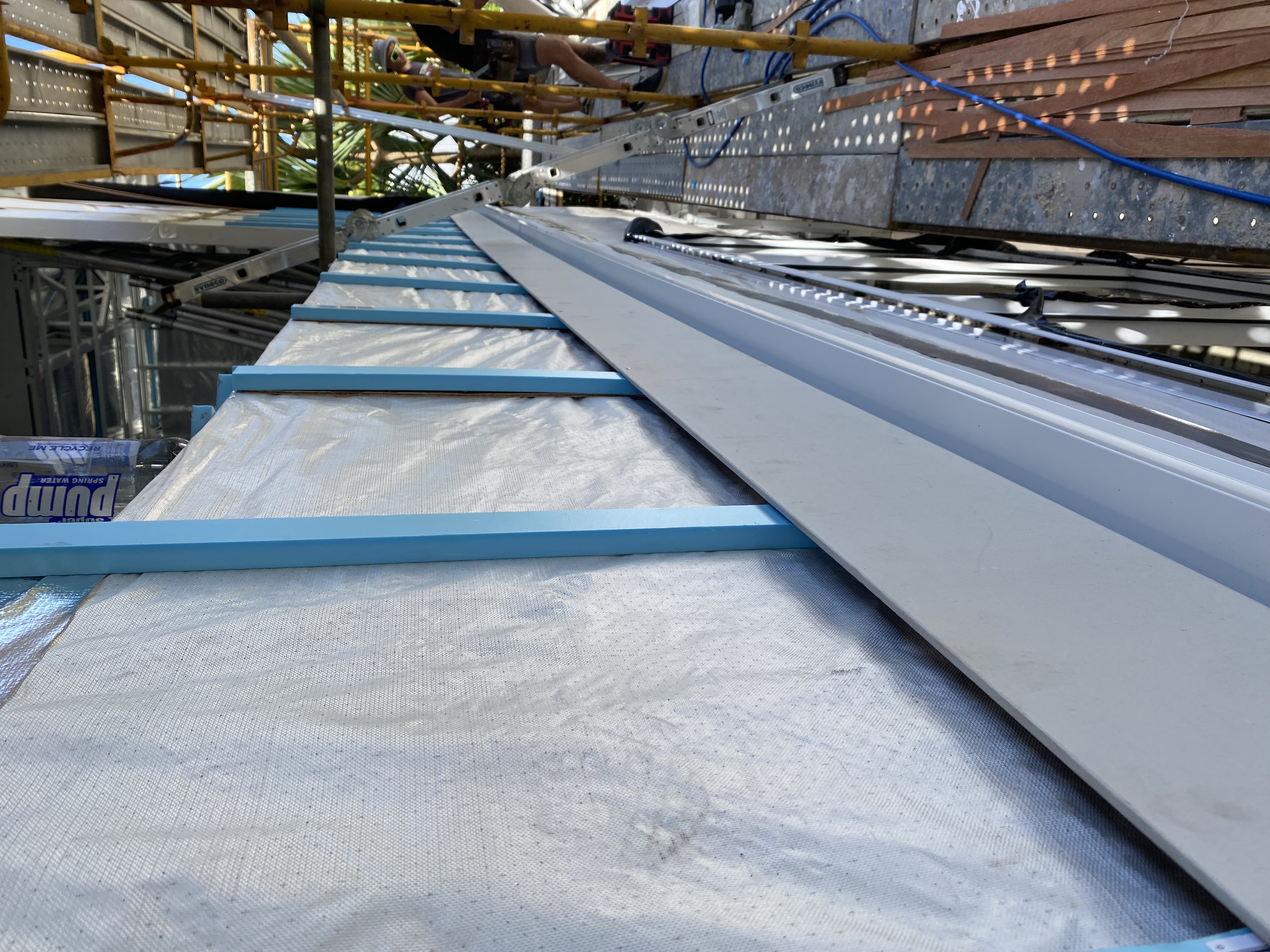
Condensation inside a wall is one of those problems that stays hidden until it is expensive. There is no puddle on the floor and no obvious leak. The first sign is often a musty smell, a dark patch bleeding through a lining, or mould appearing on the inside face of cladding when someone finally opens the wall up. By then the frame may have been damp for months.
It is no surprise, then, that Australian builders and homeowners are searching hard for answers: what causes condensation in a wall cavity, what are the signs, and how do I prevent it? This guide walks through all three, and explains why the Code has changed to take the problem more seriously.
What actually causes it
Condensation forms when warm, moist air meets a surface cooler than its dew point. In a wall, that warm moist air comes from everyday living – cooking, showering, drying clothes, even breathing. Modern homes are built far more airtight than they used to be, which is great for energy bills but means that moisture has fewer ways to escape. It pushes outward through the wall, and when it reaches a cold surface – typically the back of the cladding or a steel frame member on a cold night – it condenses into liquid water.
Two things make it worse. The first is a thermal bridge: a steel stud, plate, nogging or fixing that runs cold right through the wall gives moisture a guaranteed cold surface to condense on. This is why a thermal break matters for moisture as well as energy – and why it has to cover the whole frame. A break on the studs alone leaves the horizontal members (plates, noggins, horizontal battens) tracking outdoor temperature, and those cold lines become the exact spots where condensation forms. The second problem is a sealed-up wall with nowhere for that moisture to drain or dry. Trap the water and it sits against the frame, and that is where rot, corrosion and mould begin.
The warning signs worth knowing
Because the action happens out of sight, it pays to recognise the early signals:
- A persistent musty or earthy smell in a room with no obvious source.
- Staining, blistering paint or dark patches on internal linings, often near the floor or around windows.
- Mould on the inside face of cladding, on sarking, or in the corners of the cavity.
- Cladding fixings or steel framing showing surface corrosion when a wall is opened.
- Rooms that feel damp and are slow to warm up.
One stain is worth investigating. Several of these together usually means moisture is being trapped in the wall, not just sitting on the surface.
Why minimum compliance is not the whole answer
Australia's National Construction Code addresses condensation through its condensation management provisions. These cover, among other things, the use and installation of pliable building membranes, and which class of vapour-permeable membrane is required by climate zone – a Class 3 membrane in climate zones 4 and 5, and a higher-performing Class 4 membrane in the cooler climate zones 6 to 8.
But here is the part builders need to sit with. The Code's own explanatory notes state that the intent of these requirements is to assist in the mitigation of condensation – and that implementing them "may not prevent condensation from occurring." In other words, meeting the minimum membrane requirement is necessary, but it is not a guarantee the wall will stay dry. A Class 4 vapour-permeable membrane installed without a way for moisture to drain and ventilate can actually let moisture move into the wall and stay there.
That gap between "compliant" and "dry" is exactly why the Code has moved.
What changed under NCC 2025
NCC 2025 – now in effect in Victoria from 1 May 2026, with Queensland and New South Wales adopting on a delayed timeline – makes a drained and ventilated cavity mandatory behind external cladding in climate zones 6, 7 and 8. That captures Melbourne, much of Victoria, the ACT, the NSW tablelands, Tasmania and other cooler regions.
The principle is simple and effective: put a defined gap between the cladding and the wall, open it top and bottom so air can move, and let any moisture that does get in drain back out to the exterior. The cavity sits between the cladding and the outer side of the insulation or control layer, and must have ventilation openings of not less than 1,000 mm² per metre of wall. The cavity is formed with battens or spacers; confirm the exact minimum depth for your climate zone against NCC Part 10.8, as the detail matters.
A drained and ventilated cavity does two jobs at once. It gives liquid water a path to escape, and the moving air helps the wall dry out instead of holding moisture against the frame. It is the single most reliable thing you can do to keep a wall dry over its life.
How to prevent it – a practical checklist
- Manage the moisture at the source where you can – good extraction in wet areas reduces how much vapour ever reaches the wall.
- Get the membrane right for your climate zone – the correct vapour-permeable class, lapped/taped and installed to AS4200.2.
- Reduce the cold surfaces – a thermal break over steel framing lifts the temperature of the frame so there are fewer cold spots for moisture to condense on. Cover every member, not just the studs: an un-broken plate, nogging or k-brace stays cold and becomes a condensation line.
- Build in a drained and ventilated cavity – mandatory in climate zones 6 to 8 under NCC 2025, and a sensible inclusion beyond those zones.
- Drain and vent to the exterior – make sure the cavity is genuinely open top and bottom, not blocked by flashing or sealant.
This is where ATI's Cavi-Vent® is built for the job. It creates an integrated drained and ventilation pathway behind the cladding, directly supporting the drained-and-ventilated cavity approach the Code now requires in the cooler zones. Where the wall design does not call for full ventilation, Cavi-Break® forms the cavity and delivers the thermal break in one step. No product on its own eliminates condensation risk – but designing the wall to drain and breathe, with the cold surfaces broken, is how you stop moisture turning into damage.
The bottom line
Condensation in a wall cavity is preventable, but only if the wall is designed to let moisture out rather than trap it in. With NCC 2025 now making ventilated cavities mandatory across the cooler climate zones, the builders who get ahead of this will avoid the callbacks, the mould remediation and the liability that come from a wall that cannot dry.
If you are working in a climate zone 6 to 8 project – or you simply want a wall that stays dry – talk to ATI about getting your cavity and thermal-break detail right. Start at australianthermal.com.au.
#Condensation #DrainedAndVentilatedCavity #NCC2025 #MouldPrevention #CaviVent #AustralianBuilding #HealthyHomes
