


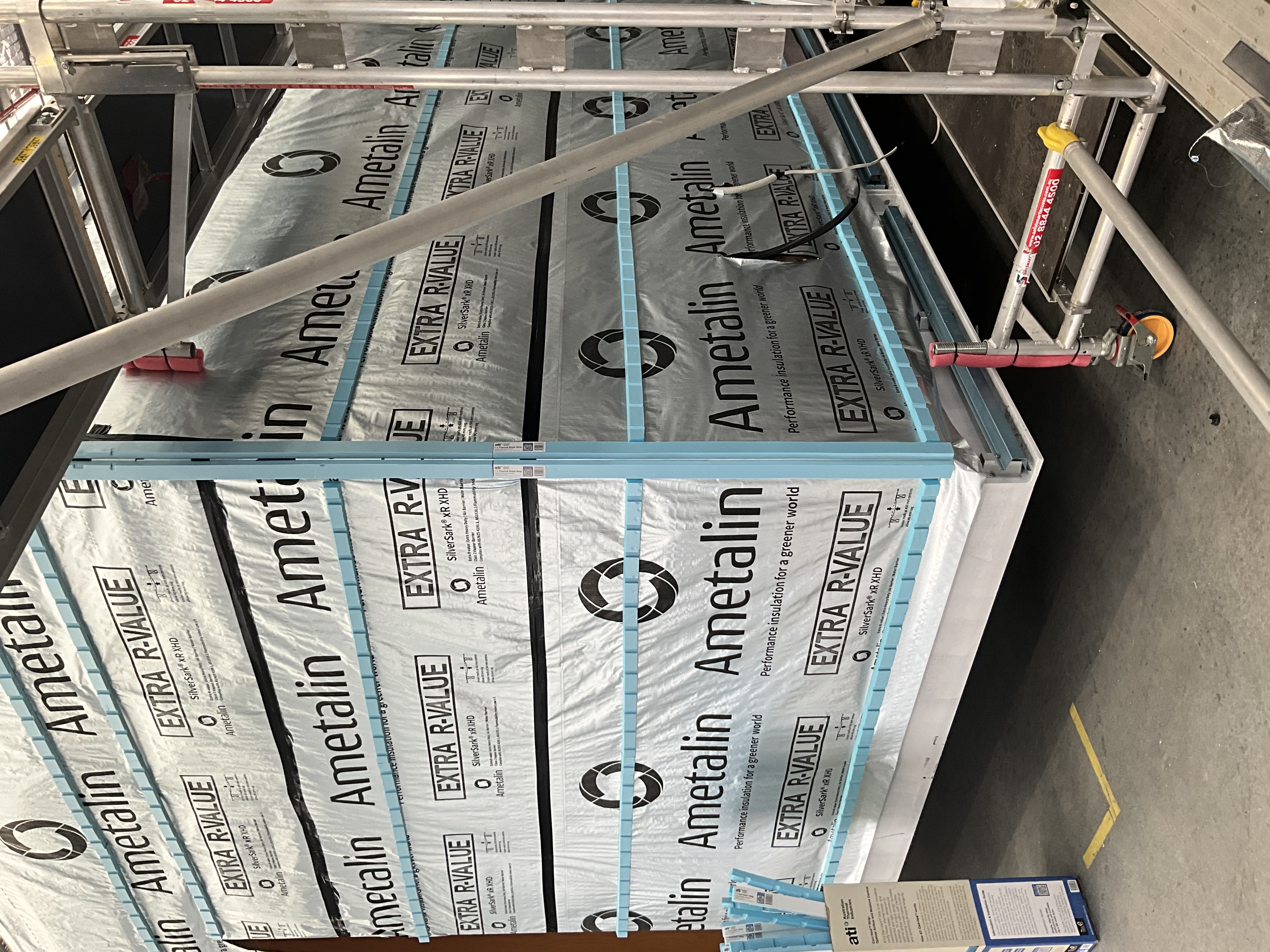
The wrap is a compliance decision, not a habit
Choosing a wall membrane is one of those calls that often gets made by habit – “we’ve always used this one” – when it’s actually governed by your climate zone and the NCC. And the frustrating part is that the Code doesn’t spell it out in one tidy place, so it’s easy to reach for the wrong wrap or the wrong class and not find out until moisture is already in the wall. Let’s make it simple.
First, the two jobs a membrane can do
A vapour permeable membrane lets water vapour pass through it. It’s used in cooler climates so that moisture pushing outward from inside the home can escape into the cavity and dry, rather than building up in the wall.
A vapour barrier does the opposite – it blocks vapour. It’s used in hot, humid tropical climates to stop external moisture being driven into the building.
Confusing the two is one of the most common and costly mistakes in the industry. A barrier where you needed a permeable membrane traps moisture against the frame; a permeable membrane where you needed a barrier lets it in. Right job, right zone.
What the NCC requires, zone by zone
The NCC’s condensation management provisions (Part 10.8) set the membrane class by climate zone. In broad terms:
Climate Zones 1 to 3 (warm to hot): No specific vapour-permeable membrane requirement in the NCC for these zones. Note that any reflective (foil) membrane claiming an R-value needs a 20 mm air space in front of it to deliver that value, and reflective membranes conduct electricity, so they carry their own installation precautions.
Climate Zones 4 and 5 (mixed): A Class 3 vapour permeable membrane is required (vapour permeance of at least 0.143 μg/N.s).
Climate Zones 6, 7 and 8 (cool to alpine): A higher-performing Class 4 vapour permeable membrane is required (vapour permeance of at least 1.14 μg/N.s). These are the cooler zones – Melbourne, much of Victoria, the ACT, the NSW tablelands, Tasmania and other cold regions – where condensation risk is highest.
Whichever class applies, every building membrane must comply with AS4200.1 and be installed in accordance with AS4200.2 – lapped or taped and sealed as required. Confirm the exact class and the commencement date that apply where you build.
The trap: a Class 4 membrane on its own is not enough
Here’s the part builders need to sit with. A vapour permeable membrane is designed to let moisture move through it – but that moisture has to go somewhere. A Class 4 vapour permeable membrane installed without a drained and ventilated cavity behind the cladding can actually let moisture move into the wall and stay there, soaking into the frame and feeding deterioration, corrosion and mould. The membrane does its job of releasing vapour; without a cavity, there’s no path for that vapour and any liquid water to drain and dry.
And this isn’t just best practice anymore. Under NCC 2025, a drained and ventilated cavity is mandatory behind external cladding in Climate Zones 6, 7 and 8 – exactly the zones that need the Class 4 membrane. Where required, that cavity must be at least 12 mm deep (formed with battens or spacers) with ventilation openings of not less than 1,000 mm² per metre of wall at the top and bottom. (Seen 18 mm quoted somewhere? That figure is superseded – the minimum is 12 mm.)
It’s worth being honest about the ceiling on all of this: the Code’s own explanatory notes say these measures are intended to assist in the mitigation of condensation and “may not prevent condensation from occurring.” Meeting the minimum is necessary, not a guarantee. That’s why the wall has to be designed to drain and breathe, not just to tick a membrane box.
Where ATI fits: the cavity that makes the membrane work
Getting the membrane class right is step one. Making it actually perform is about what sits behind it. ATI’s Cavi-Vent® creates an integrated drained and ventilated pathway behind the cladding, directly supporting the drained-and-ventilated cavity the Code now requires in the cooler zones – so the moisture your Class 4 membrane releases has a genuine way to drain out and dry. On steel-framed walls, Cavi-Break® forms that cavity and delivers the R0.2-plus thermal break in the same step (the 20 mm strip carries an indicative material R-value of R0.58 – an indicative material value, not a whole-wall figure). One component, and the wall both breathes and stays warm at the frame.
To be clear on terminology: the membrane is your vapour-control layer; Cavi-Vent® and Cavi-Break® are the cavity and thermal break that let it work. They’re different parts of the same healthy wall.
The easier, better, healthier build
Match the membrane to your zone and back it with a real cavity, and the wall gets better – it manages moisture the way the Code intends. The decision gets easier, because you’re specifying to a clear rule instead of guessing. And the home ends up healthier – a wall that drains and dries keeps damp and mould out of the place long after handover, which is the whole point.
Your next step
Not sure which membrane class and cavity detail your climate zone calls for? Tell ATI your wall system and zone, and we’ll point you to the right cavity and thermal-break solution and the data behind it, through our technical support and approved reseller channels. Use the free Total Wall R-Value Comparison tool to model your assembly, and request a sample to evaluate it for yourself.
australianthermal.com.au
Australian Thermal Industries makes Cavi-Break® and Cavi-Vent® – thermal break and cavity ventilation systems for Australian residential and light commercial construction. 10-year warranty. 100% recyclable. Independently tested. General guidance only, not a compliance determination – confirm the requirements for your project, climate zone and jurisdiction against the NCC.
#WallMembrane #NCC2025 #CondensationManagement #DrainedAndVentilatedCavity #ClimateZones #CaviVent #CaviBreak #AustralianBuilding #HealthyHomes
