


Why everyone is suddenly asking about batten treatment
Do cavity battens have to be H3? Do they need to be treated? What's the lifespan of a batten? Australian builders are asking these exact questions more than ever – because NCC 2025 makes a drained and ventilated cavity at least 12 mm deep mandatory behind lightweight cladding in Climate Zones 6, 7 and 8, and that means a lot more battens going into a lot more walls. Fair enough that the treatment question follows. Here's the straight answer.
First understand what the cavity is for: it gets wet on purpose
A drained and ventilated cavity is designed to see water. Its entire job is to give moisture that gets past the cladding – and vapour driven out of the wall – a path to drain down and dry out, through ventilation openings of at least 1,000 mm² per metre at the top and base. That's why cladding manufacturers strongly recommend the cavity, and why some limit their liability for condensation and mould where one isn't provided. So your batten lives in the dampest, breeziest part of the whole wall. Whatever you put in there has to be comfortable getting wet for decades.
So: does a timber batten need treatment?
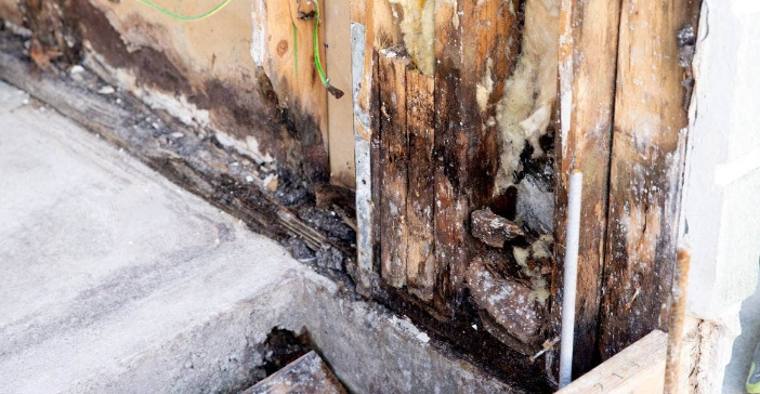
If it's timber – yes, and check the spec, not the forum. For external timber above ground, preservative treatment is standard practice in Australia, and H3 is the treatment class you'll commonly see specified for that exposure (the "H3.2" in your search results is New Zealand's equivalent under their system). Confirm what your specification and your cladding manufacturer actually call for, because an untreated or under-treated batten in a deliberately damp cavity is a short story with a bad ending: the cladding is fixed through the batten, so when the batten softens, the fixing – and the flatness of your facade – goes with it.
Treatment answers the rot question, but it drags friends along: the working life of the treatment itself, fastener compatibility, and even membrane compatibility – some membrane manufacturers restrict contact with LOSP-treated timber. Each check is manageable. They're just all checks that exist because the material can rot.
The other way to answer the question
Fit a batten that water doesn't bother. ATI's Cavi-Break® and Cavi-Vent® strips are hydrophobic and not affected by moisture (per the Technical Data Sheet) – there's nothing to treat, no preservative class to verify, no treatment lifespan to outlive, and they're backed by a 10-year warranty. And because they're thermal break strips first, they do something timber the same size can't: the 12 mm X12 delivers the cavity depth NCC 2025 asks for while adding an indicative material R-value of R0.32 (a material value, not a whole-wall R-value) – comfortably over the R0.2 thermal break minimum the energy provisions require at every cladding-to-steel contact point. Cavi-Vent® builds in the drainage and ventilation pathways the cavity exists for, and the self-adhesive strip peels and sticks in seconds – no pre-drilling, no fixings, no treated offcuts to handle.
One answer for the treatment question, the thermal break obligation and the cavity depth – in a single strip.
Easier, better, healthier
Skipping the treatment maze makes the job easier – peel, stick, clad, move on. The wall gets better – a batten that can't rot keeps the cavity working and the cladding fixed flat for the long haul. And the home stays healthier – a cavity that keeps draining and drying is your quiet insurance against mould behind the cladding, though keep the Code's own honesty in mind: condensation management measures may not prevent condensation from occurring. Build in margin, not minimums.
Your next step
Before you order another pack of treated battens, see what the alternative does to your wall's numbers: run your assembly through ATI's free Total Wall R-Value Comparison tool, then request a sample and feel the difference on one job. Tell us your wall system and climate zone and we'll point you to the right variant and the data behind it, through our technical support and approved reseller channels.
australianthermal.com.au
Australian Thermal Industries makes Cavi-Break® and Cavi-Vent® – thermal break and cavity ventilation systems for Australian residential and light commercial construction. 10-year warranty. 100% recyclable. Independently tested. General guidance only, not a compliance determination – confirm the requirements for your project, climate zone and jurisdiction against the NCC.
#CavityBattens #H3Treatment #NCC2025 #CondensationManagement #VentilatedCavity #CaviBreak #CaviVent #AustralianBuilding #ResidentialConstruction
